
 01
01Sudden Roof Leaks
Unexpected water ingress can develop quickly and may require prompt investigation to identify the affected roofing area.
Urgent roofing problems
Roofing support for sudden leaks, storm damage, displaced tiles and other urgent roofing problems affecting residential and commercial properties across our service area.
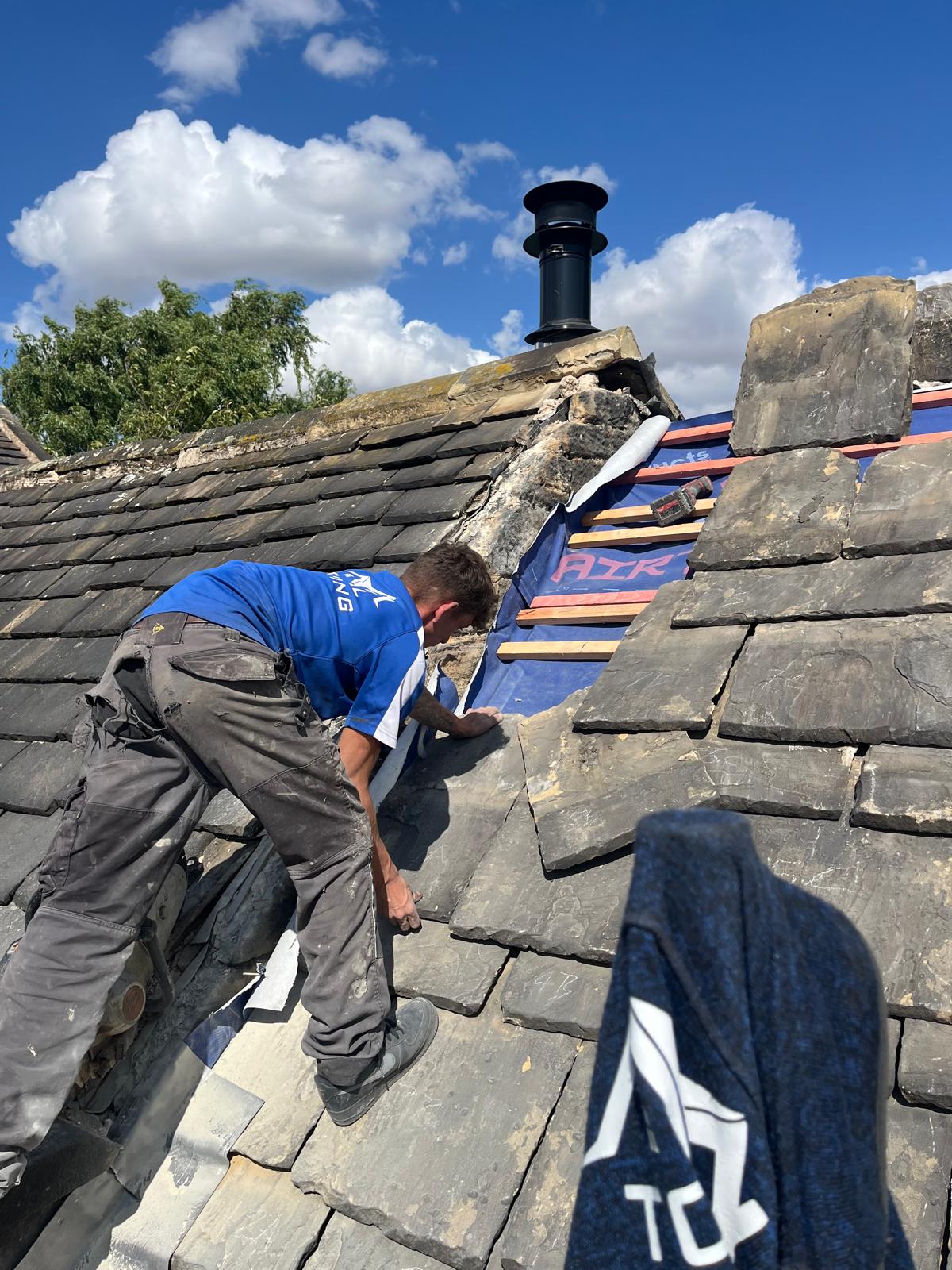
When the unexpected happens
A roof can become damaged suddenly following strong winds, severe weather or the failure of an existing roofing component.
If the damage leaves part of the property exposed, allows significant water ingress or creates loose roofing materials, the affected area should be assessed before the problem has an opportunity to become worse.
Emergency roofing is therefore about understanding the immediate problem first and determining what work is appropriate for the damaged roof.
Common roofing emergencies
The seriousness of roof damage depends on its location, extent and whether the property has been left exposed to further weather.
01Unexpected water ingress can develop quickly and may require prompt investigation to identify the affected roofing area.
 02
02Strong winds and severe weather can damage roof coverings, flashing and other exposed roofing components.
 03
03Tiles or slates that have become loose, displaced or completely detached can leave parts of a roof exposed to further weather.
 04
04Movement or damage around roof flashing can expose vulnerable junctions around chimneys, walls and other roofing details.
 05
05Loose tiles, slates or other roofing materials may present a safety concern and should not be approached from below unnecessarily.
 06
06Sudden damage to an existing flat roofing system can expose the roof beneath and allow water ingress into the property.
What to do first
Roof damage can involve loose materials, unstable surfaces and areas that are difficult to assess safely from the ground.
Avoid standing beneath loose roofing materials or attempting to access a damaged roof yourself.
If water is entering the property, move vulnerable belongings away from the affected area where it is safe to do so.
Photographs taken safely from ground level can help document what has happened without putting yourself at risk.
The roofing problem can then be assessed so the extent of the damage and appropriate next steps can be determined.
Emergency roof assessment
A visible leak inside a property does not always show the exact location of the roofing fault above it. Water can travel beneath roof coverings before appearing internally.
The damaged roofing area therefore needs to be considered alongside surrounding tiles, flashing, roof junctions and other components that may have been affected.
Learn about roof leak detection →After severe weather
Strong winds can lift or displace tiles and slates, while heavy weather can expose existing weak points around flashing, junctions and roof edges.
Some damage is immediately obvious from ground level. Other faults may only become apparent after water begins entering the property.
Explore storm damage repairs →What happens next?
Depending on the condition of the roof, the most appropriate immediate action may differ from the permanent work required afterwards.
Immediate priority
Where appropriate, the immediate priority is to address the urgent fault and limit further exposure of the damaged roofing area.
Follow-up work
Once the condition of the roof is understood, any further permanent repair or more extensive roofing work can be discussed.
How we approach urgent roof damage
Explain the roofing problem, when it occurred and any visible signs of damage or water ingress.
The affected roofing area can be assessed to understand the condition of the roof and the extent of the problem.
Where appropriate, the priority is to address the urgent roofing fault and reduce the risk of further weather exposure.
If further permanent roofing work is required, the proposed repair or replacement work can then be discussed.
Emergency roofing coverage
Select your nearest location to learn more about the roofing services available in that area.
View all service areas →Total Roofing & Repairs Limited
Additional reassurance while roofing work is carried out at your property.
Where further roofing work is required, the proposed work can be discussed before you decide how to proceed.
Covering key locations across Yorkshire, Chesterfield and surrounding communities.
Frequently asked questions
Questions about sudden roof damage, water ingress, severe weather and what to do when a roofing problem occurs unexpectedly.
Examples can include sudden water ingress, severe storm damage, displaced roof coverings, loose roofing materials and other faults that leave a property exposed or create a potential safety concern.
Keep people away from the area below the damaged roof and avoid attempting to access the roof yourself. The affected roofing area should be assessed before repair work is planned.
Many forms of storm damage can be repaired. The appropriate solution depends on the extent of the damage and whether the problem affects an isolated area or a larger section of the roofing system.
No. Many urgent roofing problems can be caused by localised damage. Complete replacement is generally considered where the roof has suffered much more extensive deterioration or damage.
Yes. Flat roofing forms part of our wider roofing work. The damaged area can be assessed to determine whether repair or more extensive renewal should be considered.
Keep away from any affected electrical fittings and avoid entering areas where the ceiling appears unstable. Where safe, move belongings away from the water and arrange for the roofing problem to be assessed.
Yes. Where further roofing work is required after the initial problem has been assessed, Total Roofing & Repairs Limited can discuss the proposed work and provide a no-obligation quotation.
Has your roof been damaged?
Contact Total Roofing & Repairs Limited to discuss the roofing problem and the condition of the affected area.